
Role of Video in Education: Complete Guide
Discover the role of video in education with this comprehensive guide. Covers benefits, common formats, integration methods, best practices, and challenges.
Devdeep
Author
Role of Video in Education: Complete Guide
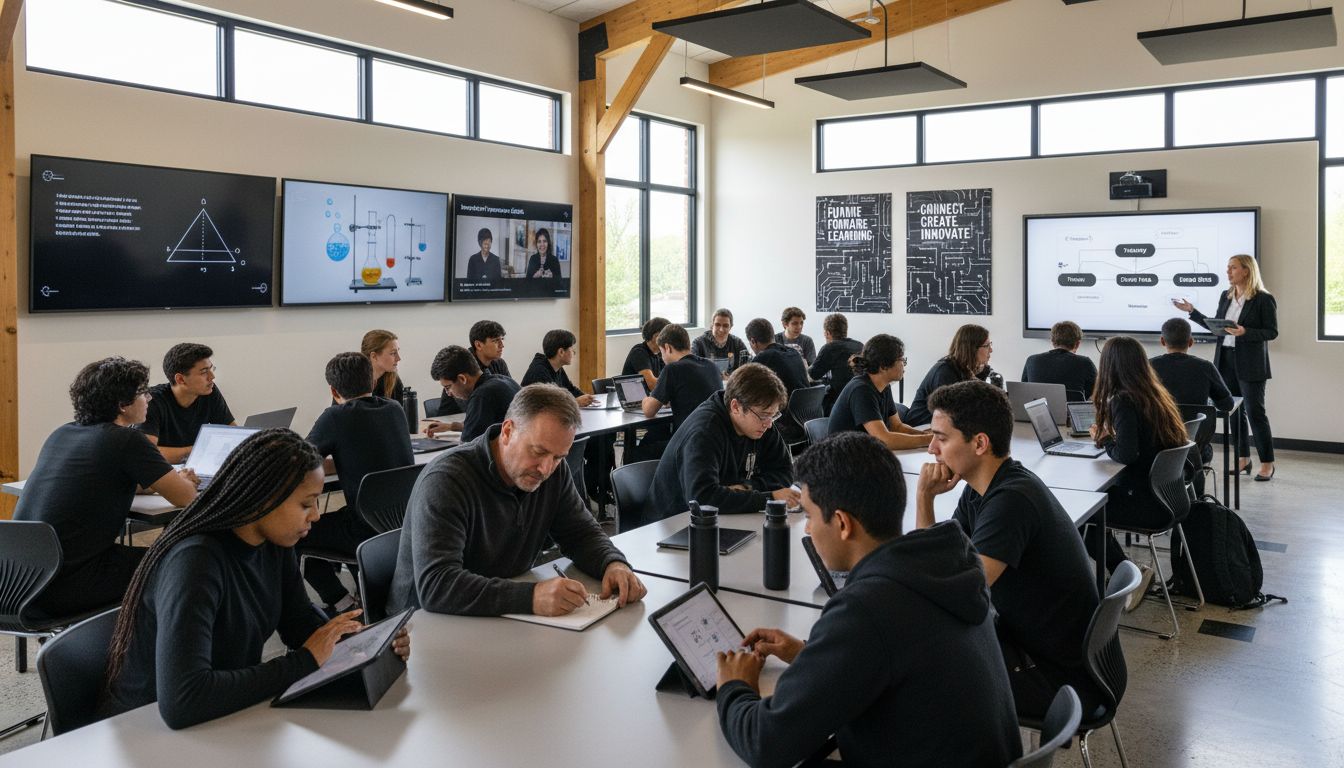
Nearly 90 percent of teachers now use videos as part of their lessons, showing just how deeply this medium has changed the way we learn. Video content is no longer just a classroom add-on. It opens doors for students of all backgrounds, making tough subjects easier to grasp and keeping learners engaged. From interactive tutorials to expert interviews, today’s educational videos offer flexible, personalized learning that textbooks simply cannot match.
Table of Contents
Key Takeaways
| Point | Details |
|---|---|
| Video Enhances Learning | Video makes education more engaging by accommodating diverse learning styles and supporting self-paced learning. |
| Versatile Video Formats | Various video formats, including lectures and animations, cater to different educational objectives and enhance comprehension. |
| Integration is Key | Effective video integration requires strategic embedding in coursework and interactive assignments to enrich the learning process. |
| Addressing Challenges | Educators must navigate challenges like cognitive overload and content relevance by designing well-structured, engaging video content. |
Defining the Role of Video in Education
- Defining The Role Of Video In Education
- Types Of Educational Videos And Formats
- Key Benefits For Students And Educators
- Integrating Video Into Learning Workflows
- Challenges, Limitations, And Best Practices
Video has transformed educational experiences by offering dynamic and engaging learning methodologies that transcend traditional classroom boundaries. According to teachers.institute, video plays a crucial role in education by enhancing accessibility, supporting diverse learning styles, and making complex concepts more comprehensible.
At its core, video serves as a powerful educational medium that breaks down geographical barriers and enables personalized learning experiences. As research from ad.ademy.au indicates, videos capture students' attention through dynamic visual and auditory elements, making learning more interactive and enjoyable. This multimedia approach facilitates deeper learning and significantly improves critical thinking skills.
Key advantages of video in education include:
- Accommodating different learning preferences
- Providing visual explanations for complex topics
- Enabling self-paced learning
- Creating immersive educational experiences
- Supporting remote and flexible learning environments
Moreover, video content allows educators to present information in engaging formats that traditional textbooks cannot replicate. By combining visual storytelling, expert explanations, and interactive demonstrations, videos transform abstract concepts into tangible, memorable learning experiences that resonate with students across various academic disciplines.
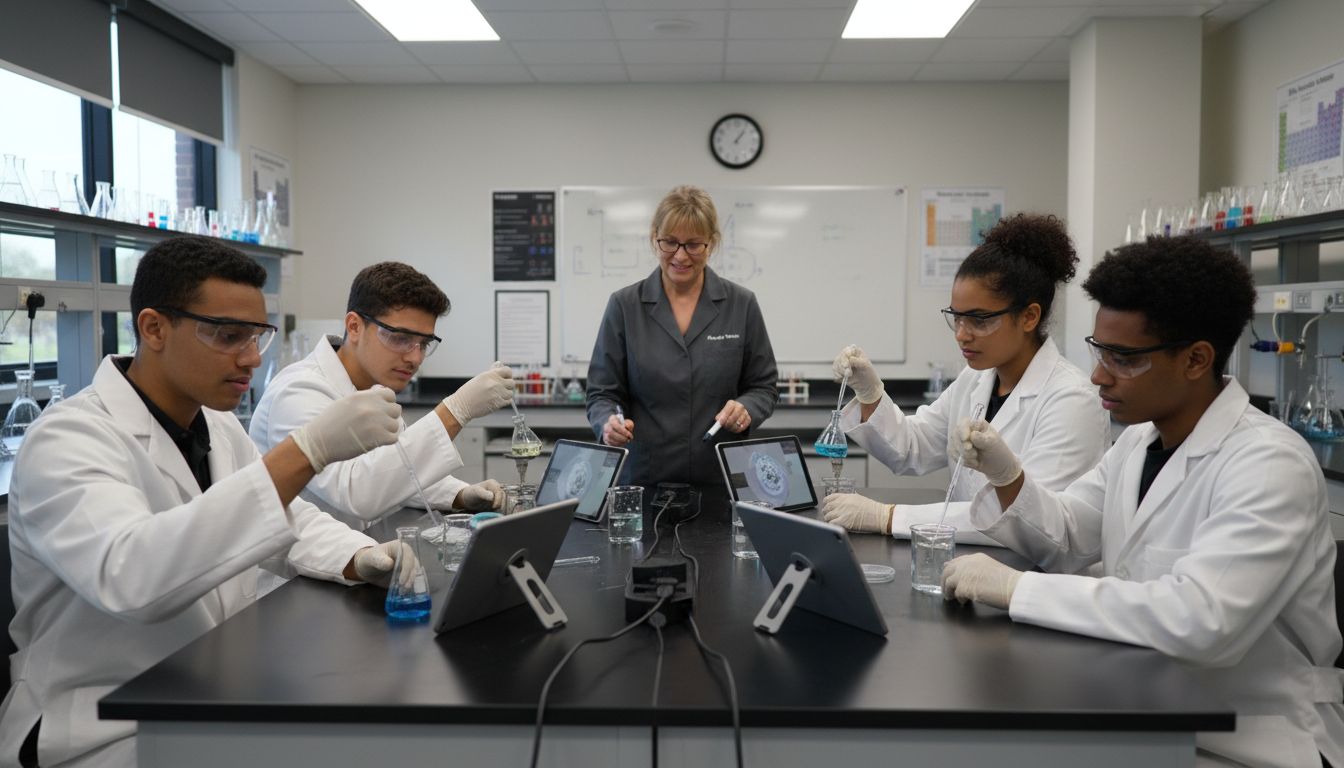
Types of Educational Videos and Formats
Educational videos have evolved into diverse formats that cater to different learning objectives and student needs. According to en.wikipedia.org, video lessons present educational material through various innovative approaches, including teacher lectures, animations, and detailed demonstrations. These formats are particularly integral to flipped classroom models, where students engage with video content before in-person class sessions to enhance overall learning experiences.
Video modeling represents another powerful educational video strategy, especially effective for specialized learning contexts. This teaching method uses video recordings to provide students with visual models of behaviors or skills, proving particularly impactful for teaching complex social interactions, communication techniques, and even athletic skills. Notably, this approach has shown remarkable effectiveness for children with autism spectrum disorders, demonstrating video's remarkable adaptability across different learning environments.
Types of educational video formats include:
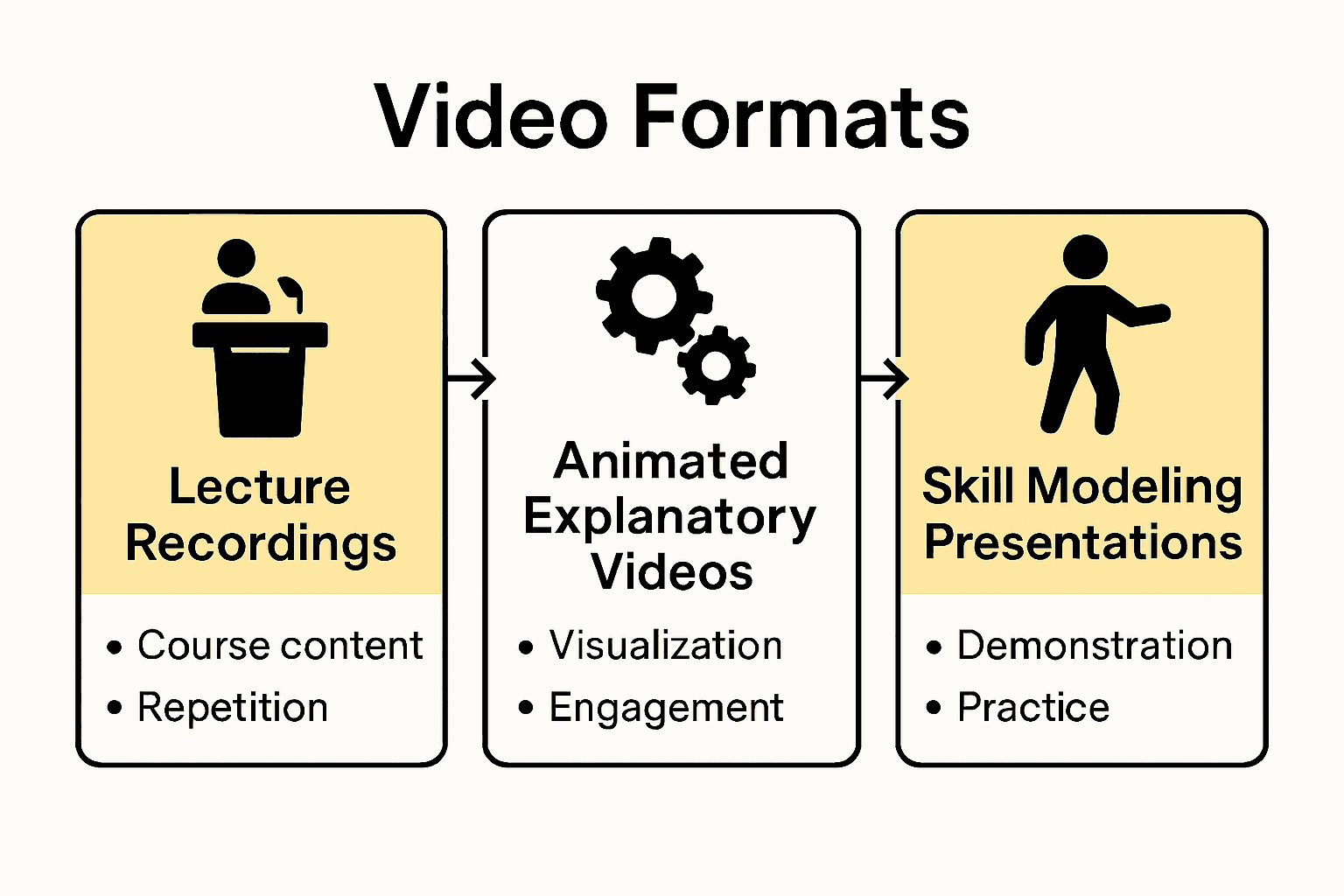
Here's a comparison of the main types of educational videos and their educational benefits:
| Video Format | Typical Use Cases | Key Educational Benefits |
|---|---|---|
| Lecture Recordings | Traditional teaching<br>Flipped classrooms | Broad access<br>Review at own pace |
| Animated Explanatory Videos | Explaining concepts<br>Visualizing processes | Clarifies complex topics<br>Engages visual learners |
| Demonstrations & Tutorials | Skill building<br>Lab practices | Step-by-step guidance<br>Hands-on learning |
| Skill Modeling Presentations | Social skills<br>Physical activities | Behavior modeling<br>Supports special needs |
| Interactive Scenario-Based Videos | Problem-solving<br>Decision making | Active engagement<br>Critical thinking |
| Expert Interview Series | Real-world insights<br>Professional experiences | Diverse perspectives<br>Career connections |
| Documentaries & Case Studies | Contextual learning<br>Deep dives | Real-life examples<br>Multidisciplinary links |
- Lecture Recordings
- Animated Explanatory Videos
- Demonstration and Tutorial Videos
- Skill Modeling Presentations
- Interactive Scenario-Based Learning Videos
- Expert Interview Series
- Documentaries and Case Study Visualizations
Beyond traditional formats, modern educational videos leverage advanced technologies to create immersive learning experiences.
When selecting video formats, educators must consider learning objectives, target audience comprehension levels, and engagement potential. For instance, [7 effective examples of video presentation formats](https://boomshare.ai/blog/7-effective-examples-of-video-presentation-formats) can help instructors design more compelling and interactive video content that resonates with diverse student populations.
Key Benefits for Students and Educators
Video technology has revolutionized educational experiences by offering transformative learning opportunities for both students and educators. According to ViewSonic, integrating video into learning environments facilitates critical thinking and problem-solving skills while inspiring student engagement and improving academic performance.
Research from slejournal.springeropen.com highlights that videos create a sensory learning environment that enables deeper understanding and enhanced information retention. These multimedia resources significantly boost student motivation and develop creative thinking capabilities across various educational contexts.
Key benefits for students include:
- Enhanced comprehension of complex topics
- Increased learning motivation
- Personalized learning experiences
- Improved retention of educational content
- Development of critical thinking skills
- Accessibility for diverse learning styles
For educators, video technologies offer unprecedented opportunities to transform traditional teaching methods. Education Solutions with innovative video tools can help instructors create more engaging, interactive, and personalized learning experiences that cater to individual student needs. By leveraging multimedia content, teachers can break down complex concepts, provide visual demonstrations, and create dynamic educational environments that inspire and challenge students beyond conventional classroom limitations.
Integrating Video Into Learning Workflows
Effective integration of video content requires a strategic approach that transforms traditional learning methodologies. According to eprints.worc.ac.uk, video integration encompasses multiple dimensions, including incorporation into lectures, seminars, independent coursework, and revision processes. This multifaceted approach supports diverse learning preferences and enhances overall student engagement.
Research from files.eric.ed.gov reveals that video-based instruction significantly improves educational outcomes by bridging theoretical knowledge with practical application. Distance learning curricula particularly benefit from video content, making learning more accessible, comprehensible, and interactive across various educational contexts.
Strategic approaches to video workflow integration include:
- Embedding video content in lecture materials
- Creating supplementary instructional videos
- Developing interactive video assignments
- Utilizing video for independent study resources
- Implementing peer review through video submissions
- Designing flipped classroom experiences
To streamline video integration, educators can leverage tools like instructional video creation guides that provide step-by-step frameworks for developing high-quality, engaging educational content. By adopting a systematic approach, instructors can transform traditional learning workflows, making educational experiences more dynamic, personalized, and effective for students across different learning environments.
Challenges, Limitations, and Best Practices
Video-based learning presents a complex landscape of opportunities and potential pitfalls that educators must carefully navigate. According to arxiv.org, the implementation of video learning requires meticulous attention to several critical factors, including ensuring video quality, precisely aligning content with learning objectives, and maintaining consistent student engagement throughout the educational experience.
Research from ojs.ycit.or.id highlights the paramount importance of addressing potential challenges such as cognitive overload and content relevance. Educators must strategically design video content that supports diverse learning styles while preventing information overwhelm that can diminish the learning experience's effectiveness.
Key challenges and corresponding best practices include:
- Preventing cognitive overload through carefully structured content
- Ensuring high-quality video production standards
- Aligning video materials with specific learning objectives
- Creating interactive elements to boost engagement
- Supporting multiple learning style preferences
- Implementing robust assessment mechanisms
To optimize video-based learning experiences, instructors can understand how to optimize video communication methods that transform potential limitations into powerful educational opportunities. By adopting a strategic, learner-centered approach, educators can develop video content that not only transfers knowledge effectively but also inspires curiosity and deep understanding across diverse learning environments.
Transform Your Educational Videos with Boom's AI-Powered Tools
The article highlights how video is reshaping education by making learning more accessible and engaging while addressing challenges like cognitive overload and content relevance. If you're an educator or content creator aiming to make your video lessons clearer, more interactive, and perfectly aligned with your learning goals, you need a solution designed for speed, clarity, and control.
Boom is the async video platform that empowers you to create polished, on-brand educational videos without the hassle of scheduling live sessions. With features like AI-generated scripts, voice-to-video recording, and multilingual dubbing, Boom transforms your raw ideas into captivating lessons that resonate with diverse learners. Discover how to integrate video seamlessly into your teaching workflow and avoid common pitfalls by visiting how to create instructional videos: easy step-by-step guide and learn more about education solutions with innovative video tools.

Ready to enhance engagement and boost retention in your classes? Experience the future of educational video creation today at Boom and start earning back your time with every video you make.
Frequently Asked Questions
What are the key benefits of using video in education?
Video enhances comprehension of complex topics, increases student motivation, provides personalized learning experiences, improves retention of educational content, and supports diverse learning styles.
How can video be integrated into traditional learning methods?
Video can be integrated by embedding it in lectures, creating supplementary instructional videos, developing interactive video assignments, utilizing it for independent study, and implementing flipped classroom experiences.
What types of educational videos are most effective?
Effective types of educational videos include lecture recordings, animated explanatory videos, demonstrations & tutorials, skill modeling presentations, interactive scenario-based videos, expert interview series, and documentaries & case studies.
What challenges are associated with video-based learning?
Challenges include preventing cognitive overload, ensuring video quality, aligning content with learning objectives, maintaining student engagement, and supporting various learning styles.
Recommended
About the Author
Devdeep
Senior Software Engineer.