
The Essential Guide to AI's Role in Meetings
Explore the role of AI in meetings with this comprehensive guide. Learn about core concepts, types, key features, practical uses, and critical challenges.
Aditya
Author
The Essential Guide to AI's Role in Meetings

Over 80 percent of american companies now use artificial intelligence to improve their meeting productivity. With virtual and hybrid work becoming the norm, teams face new communication challenges that traditional meetings just cannot solve. AI is transforming the way modern meetings run by offering real-time insights, automated summaries, and smarter collaboration tools that keep everyone engaged and on track.
Table of Contents
Key Takeaways
| Point | Details |
|---|---|
| AI Transforms Meetings | Artificial intelligence enhances collaboration by offering real-time support and intelligent facilitation, shifting traditional meetings to focus on productivity. |
| Proactive Meeting Management | AI tools provide actionable insights during discussions, helping teams stay aligned with their goals and minimizing time waste. |
| Diverse AI Tool Capabilities | Modern meeting tools include features like automated summarization, real-time transcription, and context-aware guidance to streamline communication. |
| Navigating Challenges and Ethics | Organizations must address privacy concerns and ethical considerations when implementing AI technologies in meetings to maintain trust and human agency. |
Defining AI's Role in Modern Meetings
- Defining AI's Role In Modern Meetings
- Types Of AI Tools Used In Meetings
- How AI Transforms Meeting Processes
- Benefits And Real-World Applications
- Challenges, Risks, And Limitations
Artificial intelligence is transforming how teams collaborate and communicate, revolutionizing traditional meeting structures with intelligent, adaptive technologies. Modern meetings are no longer just synchronous gatherings but dynamic, technology-enhanced interactions where AI acts as a strategic facilitator and productivity accelerator.
Research from arxiv.org through the CoExplorer Technology Probe reveals fascinating insights into how generative AI can enhance intentionality during video meetings. By providing real-time guidance and context-aware support, AI helps teams stay focused and reduce unnecessary workload. The probe demonstrates that AI can actively monitor meeting progress, suggest relevant discussion points, and ensure conversations remain goal-oriented.
The "AreWe On Track?" study from arxiv.org further illuminates AI's potential in meeting management by highlighting its capacity for goal reflection. Unlike traditional meeting tools that passively record interactions, AI can now actively analyze conversation dynamics, track discussion alignment with predetermined objectives, and provide actionable insights to participants. This represents a significant shift from retrospective review to proactive meeting intelligence.
Key capabilities of AI in modern meetings include:
- Automatic meeting summarization
- Real-time transcription and translation
- Intelligent action item tracking
- Context-aware discussion guidance
- Performance and engagement analytics
As teams increasingly embrace remote and hybrid work models, AI-powered productivity tools are becoming essential for maintaining communication efficiency and team cohesion. By transforming meetings from time-consuming obligations into strategic, focused interactions, AI is redefining collaborative work for the digital age.
Types of AI Tools Used in Meetings
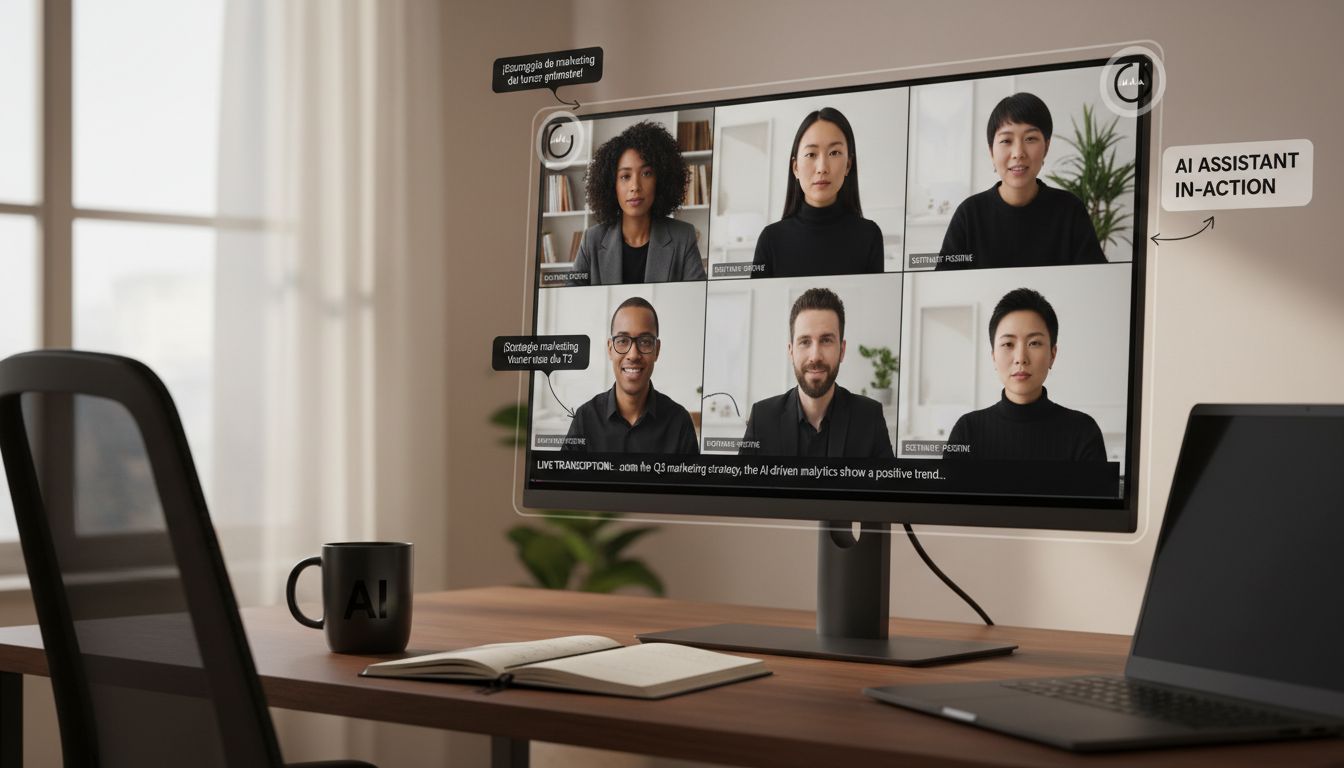
AI tools are rapidly transforming meeting technologies, offering innovative solutions that streamline collaboration, enhance productivity, and provide intelligent support throughout the meeting lifecycle. These sophisticated technologies go beyond traditional recording and transcription, delivering comprehensive assistance that adapts to team dynamics and communication needs.
Microsoft highlights several critical AI tools revolutionizing meeting experiences. These tools include virtual assistants capable of creating meeting agendas, performing real-time language translation, and generating comprehensive meeting summaries. The goal is to reduce administrative overhead and allow participants to focus on meaningful conversation and strategic decision-making.
According to research from the University of Colorado Denver, advanced AI assistants like Zoom AI Companion and Microsoft Copilot 365 are setting new standards in meeting intelligence. Intelligent meeting tools now offer capabilities such as automated note-taking, action item tracking, and contextual insights that transform passive recording into active collaboration support.
Key categories of AI meeting tools include:
- Transcription and Translation Tools
- Real-time speech-to-text conversion
- Multilingual translation services
- Accent and dialect recognition
- Intelligent Assistants
- Agenda creation and management
- Action item tracking
- Meeting summary generation
- Engagement and Analytics Tools
- Participant sentiment analysis
- Speaking time tracking
- Conversation flow monitoring
As teams continue adopting AI collaboration solutions, these tools are becoming essential for maintaining communication efficiency and creating more meaningful, productive meeting experiences. The future of meetings is not just about technology, but about creating smarter, more adaptive communication environments.
How AI Transforms Meeting Processes
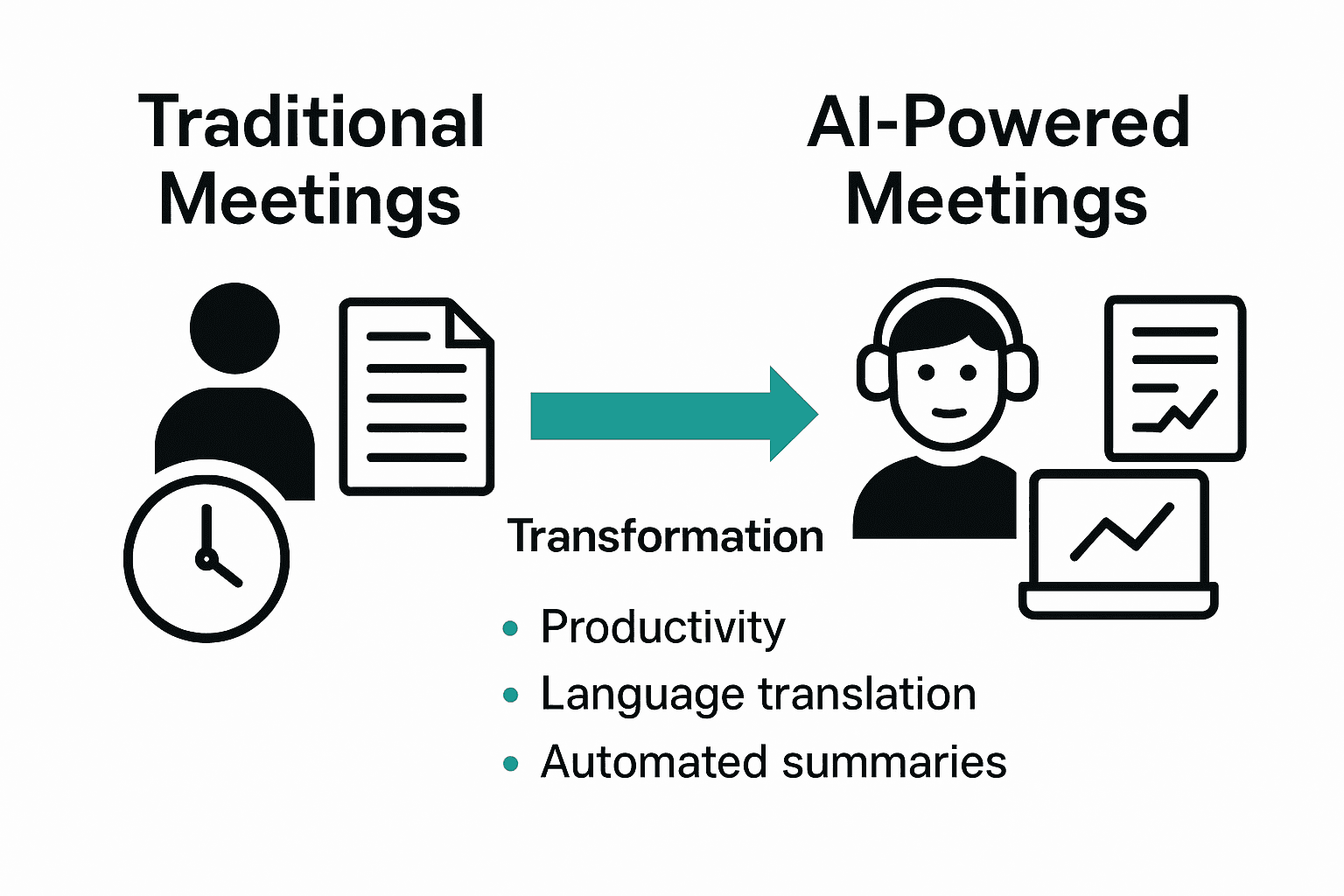
Artificial intelligence is fundamentally reshaping how organizations approach collaboration, turning traditional meeting structures into dynamic, intelligent interactions that optimize communication and productivity. The transformation goes far beyond simple technological enhancement, representing a profound shift in how teams communicate, track progress, and generate meaningful outcomes.
Research from the 'MeetMap' study reveals groundbreaking insights into how large language models can create real-time dialogue maps during online meetings. These advanced AI systems can now track conversation threads, connect related ideas, and provide structural guidance that helps participants maintain clear, focused discussions. By generating visual representations of dialogue flow, AI introduces a new level of clarity and intentionality to meeting communication.

Further research on AI-assisted goal reflection demonstrates how intelligent systems can dynamically adapt meeting objectives in real time. Adaptive meeting intelligence allows AI to monitor conversation drift, suggest refocusing strategies, and ensure teams remain aligned with their core objectives. This represents a significant leap from passive recording to active meeting management, where AI becomes a proactive participant in collaboration.
Key transformative processes enabled by AI include:
- Intelligent Dialogue Mapping
- Real-time conversation tracking
- Idea connection and relationship mapping
- Contextual thread visualization
- Dynamic Goal Alignment
- Objective monitoring
- Conversation redirection
- Performance tracking
- Predictive Communication
- Sentiment analysis
- Participant engagement prediction
- Communication pattern recognition
As teams continue to explore productivity strategies, AI-driven meeting processes are becoming essential for organizations seeking to optimize communication, reduce inefficiencies, and create more meaningful collaborative experiences. The future of meetings is not just about technology, but about creating intelligent, adaptive communication ecosystems that understand and enhance human interaction.
Benefits and Real-World Applications
Artificial intelligence is revolutionizing meeting experiences across industries, delivering unprecedented improvements in communication efficiency, productivity, and collaborative intelligence. The integration of AI technologies transforms meetings from traditional time-consuming interactions into strategic, data-driven opportunities for organizational growth and innovation.
Research from the CoExplorer Technology Probe provides compelling evidence of AI's practical benefits in meeting management. The study demonstrates that AI can significantly reduce workload and help teams maintain focused, productive discussions. By intelligently tracking conversation trajectories and suggesting real-time adjustments, AI ensures meetings remain purposeful and goal-oriented, effectively minimizing time waste and enhancing overall team performance.
Additionally, insights from human-AI collaboration research reveal fascinating applications beyond traditional meeting management. Empathic communication technologies are emerging as powerful tools that can enhance conversation quality, improve emotional intelligence, and create more meaningful interactions. This breakthrough suggests AI's potential extends far beyond simple task management, potentially transforming how humans communicate and understand each other in professional environments.
Key benefits of AI in meeting processes include:
- Productivity Optimization
- Automated meeting summaries
- Action item tracking
- Time efficiency improvements
- Communication Enhancement
- Real-time language translation
- Sentiment analysis
- Contextual conversation guidance
- Organizational Intelligence
- Performance metric tracking
- Knowledge capture and retention
- Continuous process improvement
As organizations continue to explore productivity strategies, AI-powered meeting technologies are becoming essential tools for forward-thinking teams. These intelligent systems are not just technological upgrades but fundamental reimaginings of collaborative work, promising to unlock new levels of organizational effectiveness and human potential.
Challenges, Risks, and Limitations
As artificial intelligence becomes increasingly integrated into meeting technologies, organizations must carefully navigate the complex landscape of potential challenges and ethical considerations. The transformative power of AI in meetings is accompanied by nuanced risks that require thoughtful management and strategic implementation.
Research from the Wikipedia article on AI notetakers highlights critical ethical concerns surrounding AI meeting technologies. Key issues include the potential for recording meetings without explicit participant consent and the risk of AI systems misrepresenting or misinterpreting complex discussion dynamics. These challenges underscore the importance of developing robust privacy protocols and transparent AI interaction guidelines that protect individual rights and maintain the integrity of collaborative spaces.
The 'AreWe On Track?' study provides additional insights into the technological limitations of AI-assisted meetings. Researchers identified significant challenges in balancing AI intervention intensity, noting that overly aggressive AI systems can potentially disrupt natural conversation flows and reduce human spontaneity. The delicate balance between technological assistance and human communication requires sophisticated algorithmic design that respects the nuanced nature of human interaction.
Key challenges in AI meeting technologies include:
- Privacy and Consent Risks
- Unauthorized recording
- Data protection concerns
- Consent management complexities
- Technological Limitations
- Contextual misunderstandings
- Emotional intelligence gaps
- Conversation flow interruptions
- Ethical Implementation Challenges
- Transparency in AI decision making
- Bias mitigation
- Maintaining human agency
As organizations continue to explore productivity strategies, a critical approach is essential. Successfully integrating AI into meeting processes requires a balanced perspective that acknowledges both technological potential and inherent human complexity. The goal is not to replace human interaction but to create intelligent tools that enhance, rather than diminish, our collaborative capabilities.
Redefine Your Meetings with AI-Powered Async Video Solutions
The article highlights how AI is reshaping modern meetings by addressing common challenges like disrupted communication flow, ineffective goal alignment, and excessive time spent on synchronous sessions. If you are tired of wasting hours in back-to-back meetings that lack focus and clear outcomes, solutions that use AI for real-time guidance and intelligent collaboration are the future. Instead of relying on traditional meeting tools that only record or transcribe, you can adopt technologies that actively boost productivity and reduce meeting fatigue.
Boom offers a revolutionary way to escape the constraints of live meetings by enabling async video communication powered by AI. With features such as auto-scripting, AI voiceovers, and instant multilingual dubbing, you can clearly deliver your message without scheduling headaches or timezone conflicts. Boom’s design helps teams stay on-brand and aligned without interrupting creative flow or collaboration. It fully supports the article’s core concepts like goal reflection and reducing unnecessary workload in meetings.
Discover how AI-powered productivity tools and intelligent async communication combine to transform your workflows.

Experience the future of meetings with Boom today and earn your time back. Start creating impactful videos that replace meetings and elevate team collaboration on your schedule. See why Boom is built for the digital age at boomshare.ai and join the movement to ditch scheduling stress forever.
Frequently Asked Questions
How does AI enhance productivity in meetings?
AI enhances productivity by automating tasks like meeting summaries, action item tracking, and providing real-time transcription and translation. This allows participants to focus on meaningful discussions rather than administrative details.
What are some key features of AI tools used in meetings?
Key features of AI tools include automatic meeting summarization, real-time transcription and translation, intelligent action item tracking, contextual discussion guidance, and performance analytics that help optimize communication and collaboration.
Can AI help improve communication during meetings?
Yes, AI can improve communication by offering real-time language translation, sentiment analysis, and contextual conversation guidance, allowing teams to communicate more effectively across language barriers and understand each other's emotions better.
What challenges are associated with using AI in meetings?
Challenges include privacy risks related to unauthorized recording, potential misinterpretations by AI systems, and the risk of disrupting natural conversation flow if AI intervention is too aggressive. It's important to establish clear guidelines and ethical considerations while using AI technologies.
Recommended
About the Author
Aditya
Software Engineer.