
Video Recorder Explained: Modern Tools, Types, and Uses
Comprehensive guide to video recorders: definitions, key types, AI advancements, best practices, and async video tools for creators and teams.
Devdeep
Author
Video Recorder Explained: Modern Tools, Types, and Uses

Nearly every modern business and educator relies on video recorders to capture moments, document events, and share ideas across platforms. With over 80 percent of organizations using digital video technology for communication and training, misunderstandings about how these tools work are common. Knowing the real story behind video recorders helps you avoid mistakes and choose solutions that fit your unique needs, whether for work, teaching, or personal projects.
Table of Contents
Key Takeaways
| Point | Details |
|---|---|
| Understanding Video Recorders | Video recorders are versatile tools that capture, store, and reproduce visual and audio content across various contexts, breaking misconceptions about their complexity and exclusivity. |
| Types of Video Recorders | There are three main categories: stand-alone embedded DVRs, network video recorders (NVRs), and hybrid digital recorders, each designed for specific needs. |
| Modern Features and AI Innovations | Contemporary video recorders incorporate advanced features like multi-source capture and intelligent scene recognition, significantly enhancing recording capabilities through AI technology. |
| Selecting the Right Recorder | Careful evaluation of compatibility, scalability, and performance metrics is essential when choosing a video recorder to avoid common mistakes and ensure effectiveness. |
Defining Video Recorder: Core Concepts and Misconceptions
- Defining Video Recorder: Core Concepts And Misconceptions
- Types Of Video Recorders: Hardware And Software Options
- How Modern Video Recorders Work: Features And Workflow
- AI-Powered Video Recorders: Key Innovations And Benefits
- Practical Use Cases: Async Communication, Collaboration, And Branding
- Common Mistakes And Choosing The Right Video Recorder
A video recorder is a sophisticated digital technology designed to capture, store, and reproduce visual and audio content across multiple platforms and use cases. According to swgde, digital video recorders (DVRs) represent a critical tool for capturing real-time and historical visual information with precision and reliability.
At its core, a video recorder transforms analog or digital signals into storable media formats, enabling users to preserve moments, document events, and create rich multimedia content. Benchmark Magazine highlights the fundamental distinction between hardware-based Network Video Recorders (NVRs) and software-based Video Management Systems (VMS), each offering unique capabilities for different recording scenarios.
Common misconceptions about video recorders often revolve around their complexity and limitations. Many people assume video recorders are exclusively professional tools, but modern technologies have democratized their use across personal, educational, and professional domains. Key features that dispel these myths include:
- Flexible recording modes (continuous, motion-triggered, scheduled)
- High-resolution capture capabilities
- Cloud and local storage options
- Cross-platform compatibility
- Advanced compression technologies
Understanding these core concepts reveals that video recorders are not just recording devices, but powerful communication and documentation tools adaptable to numerous contexts. Learn more about modern video recording techniques in our guide on understanding video tools.
Types of Video Recorders: Hardware and Software Options
Video recorders represent a diverse ecosystem of technologies, each designed to capture and preserve visual information through unique approaches. swgde identifies three primary categories of digital video recorders that serve different technological and operational needs: stand-alone embedded DVRs, network video recorders (NVRs), and hybrid digital recorders.
Benchmark Magazine provides critical insights into the fundamental differences between hardware and software-based recording solutions. Hardware-based NVRs typically offer dedicated, robust recording capabilities with integrated storage and processing power, while software-based Video Management Systems (VMS) provide greater flexibility and scalability across diverse computing environments.
Key distinctions between video recorder types include:
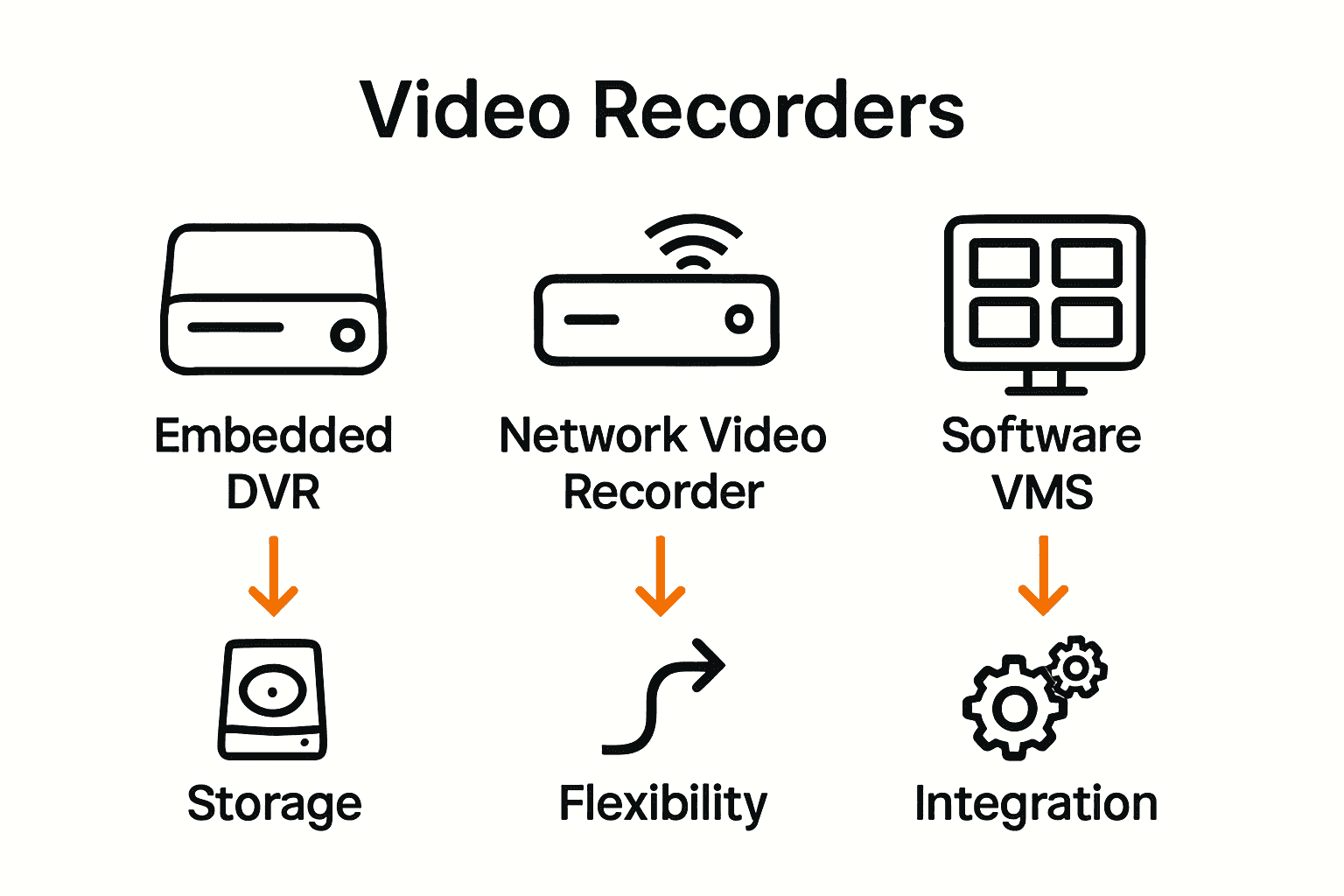
- Stand-alone Embedded DVRs: Self-contained units with integrated storage and processing
- Network Video Recorders (NVRs): IP-based systems designed for distributed network recording
- Hybrid Digital Recorders: Combine analog and digital recording capabilities
- Software-based VMS: Flexible platforms running on standard computing hardware
Understanding these variations helps users select the most appropriate video recording solution for their specific requirements.
How Modern Video Recorders Work: Features and Workflow
Modern video recorders represent a sophisticated blend of hardware and software technologies designed to capture, process, and store visual information with unprecedented precision. Duke University OIT highlights the complex functionalities that define contemporary video recording systems, emphasizing their ability to seamlessly integrate multiple recording modes and advanced capture techniques.
The workflow of a typical video recorder involves several critical stages that transform raw visual data into meaningful, shareable content. These stages include input capture, signal processing, compression, storage, and output management.
 Advanced systems now incorporate intelligent features like automatic scene detection, noise reduction, and real-time encoding that dramatically enhance the recording experience.
Key operational features of modern video recorders include:
- Adaptive Resolution Scaling: Automatically adjust video quality based on available storage and bandwidth
- Multi-Source Capture: Record from multiple inputs simultaneously (screen, webcam, external devices)
- Intelligent Compression: Optimize file sizes without significant quality loss
- Advanced Editing Tools: Trim, annotate, and enhance recordings in real-time
- Cloud Integration: Seamless storage and sharing capabilities
Professionals seeking to optimize their video communication strategies can explore effective video presentation formats to maximize the potential of these sophisticated recording technologies.
AI-Powered Video Recorders: Key Innovations and Benefits
Artificial intelligence has revolutionized video recording technologies, transforming them from simple capture devices into intelligent, adaptive systems. arXiv researchers highlight groundbreaking innovations in video data management, demonstrating how AI enables unprecedented capabilities in storage, retrieval, and processing of visual information.
Scanner research from arXiv reveals remarkable advancements in video analysis, introducing sophisticated dataflow graphs and intelligent scheduling techniques that optimize performance across diverse hardware environments. These innovations enable video recorders to intelligently adapt, process, and extract meaningful insights from captured content in ways previously impossible.
Key AI-powered innovations in video recording include:
- Intelligent Scene Recognition: Automatically detect and categorize visual contexts
- Dynamic Compression Algorithms: Optimize file sizes while maintaining quality
- Real-time Content Analysis: Extract metadata and insights during recording
- Adaptive Performance Scaling: Adjust processing based on available computational resources
- Predictive Enhancement: Automatically improve video quality using machine learning
Professionals looking to leverage these transformative technologies can explore how AI enhances productivity in video technology.
Practical Use Cases: Async Communication, Collaboration, and Branding
Video recorders have transformed from simple recording tools into powerful communication platforms that enable unprecedented collaboration and engagement. Duke University OIT highlights the multifaceted applications of modern video recording technologies across professional, educational, and creative domains, demonstrating their capacity to bridge communication gaps and enhance productivity.
In the realm of asynchronous communication, video recorders now serve as critical tools for teams and individuals seeking flexible, time-independent interaction methods. They enable professionals to create detailed presentations, provide nuanced feedback, and share complex information without requiring simultaneous participation from all parties, effectively eliminating scheduling constraints and geographical limitations.
Practical use cases for modern video recording technologies span multiple contexts:
- Remote Team Collaboration: Share project updates and complex explanations
- Educational Content Creation: Develop interactive learning materials
- Product Demonstrations: Showcase features without live scheduling
- Corporate Training: Generate consistent, reusable instructional content
- Personal Branding: Create professional, engaging multimedia presentations
Teams and professionals looking to revolutionize their communication strategies can explore the complete guide to async video communication and unlock new possibilities in digital interaction.
Common Mistakes and Choosing the Right Video Recorder
Video recorder selection is a critical decision that can dramatically impact communication and documentation effectiveness. Benchmark Magazine reveals that many professionals make costly mistakes when choosing recording solutions, often underestimating the complexity of their specific technological requirements.
Scientific Working Group on Digital Evidence emphasizes the importance of comprehensive evaluation before implementing any video recording system. The most common pitfalls emerge from overlooking critical factors such as scalability, integration capabilities, and long-term performance requirements.
Key considerations when selecting a video recorder include:
- Compatibility: Ensure seamless integration with existing technology infrastructure
- Scalability: Choose solutions that can grow with your organizational needs
- Storage Requirements: Assess data retention and archival capabilities
- Performance Metrics: Evaluate resolution, frame rate, and compression technologies
- Budget Constraints: Balance feature set with financial limitations
Professionals seeking to make informed decisions can understand why automating video creation matters to optimize their recording strategy and avoid common implementation challenges.
Take Control of Your Video Communication with AI-Powered Tools
If you found value in understanding the many types and functions of video recorders from the article, you know that capturing high-quality video content is essential but can be time-consuming and complicated. Many professionals struggle with recording, editing, and sharing video asynchronously without wasting hours on meetings and scheduling conflicts. Whether you want to create branded presentations, share product demos, or collaborate remotely, the challenge is to remain efficient while producing polished, clear videos.
Boom is designed to solve these challenges with AI-powered async video recording that saves you time and enhances your message. No matter if you are a freelancer, startup founder, or remote team member, Boom combines voice-to-video recording, auto-generated scripts, multilingual dubbing, and instant branding in one easy platform. It lets you create standout videos effortlessly and skip the hassle of live meetings and complex video editing workflows.
Looking for solutions that match modern video recorder workflows and boost productivity? Learn more about async video communication and discover how to understand productivity with AI video technology.

Experience how Boom’s AI tools turn your raw voice into polished, on-brand videos ready to share anywhere. Stop letting scheduling conflicts stall your communication. Visit Boom today and start earning your time back with every video you create.
Frequently Asked Questions
What is a video recorder?
A video recorder is a technology designed to capture, store, and reproduce audio-visual content, transforming analog or digital signals into storable media formats for various uses, such as documentation and multimedia creation.
What are the main types of video recorders?
The primary types of video recorders include stand-alone embedded DVRs, network video recorders (NVRs), hybrid digital recorders, and software-based video management systems (VMS), each catering to different recording needs and technologies.
How do modern video recorders work?
Modern video recorders capture, process, compress, store, and manage visual data through advanced features like adaptive resolution scaling, multi-source capture, and intelligent compression, enhancing the recording and sharing experience.
What are some common use cases for video recorders?
Common use cases for video recorders include remote team collaboration, educational content creation, product demonstrations, corporate training, and personal branding, as they facilitate flexible and effective communication across various contexts.
Recommended
About the Author
Devdeep
Senior Software Engineer.