
Why Use Voice-to-Video Tools for Modern Workflows
Voice-to-video tools save time, boost clarity, and streamline collaboration. Learn how features, use cases, and practical benefits drive adoption.
Daniel M
Author
Why Use Voice-to-Video Tools for Modern Workflows

Nearly 85 percent of American businesses now rely on video content to connect with audiences more effectively. As digital communication evolves, the shift toward voice-to-video tools opens new doors for fast and accessible media creation. These innovative technologies make it possible for American professionals to produce polished videos from spoken words, reducing the need for complex editing and long production times while ensuring their message resonates in every setting.
Table of Contents
Key Takeaways
| Point | Details |
|---|---|
| Innovative Voice-to-Video Technology | Voice-to-video tools utilize AI to convert spoken input into structured video content, streamlining multimedia production. |
| Accessibility Across Professions | These tools enable professionals from various fields to create videos without extensive technical skills, enhancing communication efficiency. |
| Core Features Transforming Production | Key features such as AI scripting, multilingual support, and instant branding simplify video creation and maintain consistency. |
| Awareness of Limitations | Users must recognize potential limitations in AI-generated content, including emotional nuances and ethical concerns surrounding voice cloning. |
Defining Voice-to-Video Tools and Technology
- Defining Voice-to-Video Tools And Technology
- Key Benefits Over Traditional Video Apps
- Core Features: AI Scripting, Multilingual, And Branding
- Real-World Use Cases Across Professions
- Pitfalls, Limitations, And Common Misconceptions
Voice-to-video tools represent an innovative technological approach that transforms spoken communication into structured, visually engaging video content. These advanced platforms leverage artificial intelligence to convert raw voice recordings into polished, professional videos with minimal manual editing. By integrating speech recognition, automated scripting, and visual design algorithms, these tools streamline multimedia content creation in unprecedented ways.
At their core, voice-to-video technologies utilize sophisticated machine learning models to analyze vocal input and generate corresponding visual representations. Multilingual video workflow platforms now integrate complex transcription, translation, and voice-over engines that can transform spoken content across different languages and formats. This means professionals can record a message in one language and automatically generate localized versions with appropriate visual context, dramatically reducing production time and complexity.
The practical applications of these tools extend across multiple professional domains. Content creators, marketers, educators, and business communicators can now produce high-quality video content without extensive technical skills. Tools like advanced video editing platforms enable users to edit media by modifying text transcripts, effectively turning traditional video production workflows on their head. Key features typically include:
- Automatic speech-to-text transcription
- AI-powered visual design generation
- Multilingual dubbing capabilities
- Instant branding and template integration
- Seamless editing through text-based interfaces
By eliminating complex technical barriers, voice-to-video technologies democratize multimedia content creation, allowing professionals to communicate more effectively and efficiently across global platforms.
Key Benefits Over Traditional Video Apps
Traditional video applications have long been plagued by complex editing processes and time-consuming workflows. Voice-to-video tools represent a revolutionary approach that dramatically transforms video production methods, offering significant advantages over conventional video editing platforms. These innovative technologies streamline content creation by eliminating the technical barriers that typically slow down multimedia production.

AI-powered video production tools now enable creators to edit media through text-based interfaces, a groundbreaking feature that fundamentally changes how content is developed. Users can now modify videos by simply editing text transcripts, removing filler words automatically, and generating professional voiceovers without extensive technical skills. This text-based editing approach reduces production time by up to 70%, making video creation more accessible and efficient for professionals across various industries.
The economic and creative advantages of voice-to-video tools extend far beyond traditional video applications. Professional voice-over technology now allows creators to produce high-quality narrations without expensive equipment or professional voice actors. Key benefits include:
- Instant content generation
- Automated editing capabilities
- Cost-effective production
- Multilingual support
- Seamless brand consistency
- Reduced technical complexity
By eliminating the traditional barriers of video production, these advanced tools democratize multimedia content creation, empowering professionals to communicate more effectively and efficiently across global platforms.
Core Features: AI Scripting, Multilingual, and Branding
Voice-to-video technologies have revolutionized content creation through three transformative core features: AI scripting, multilingual capabilities, and intelligent branding solutions. Advanced AI platforms now enable creators to generate sophisticated video content with unprecedented efficiency and precision, fundamentally changing how professionals approach multimedia production.
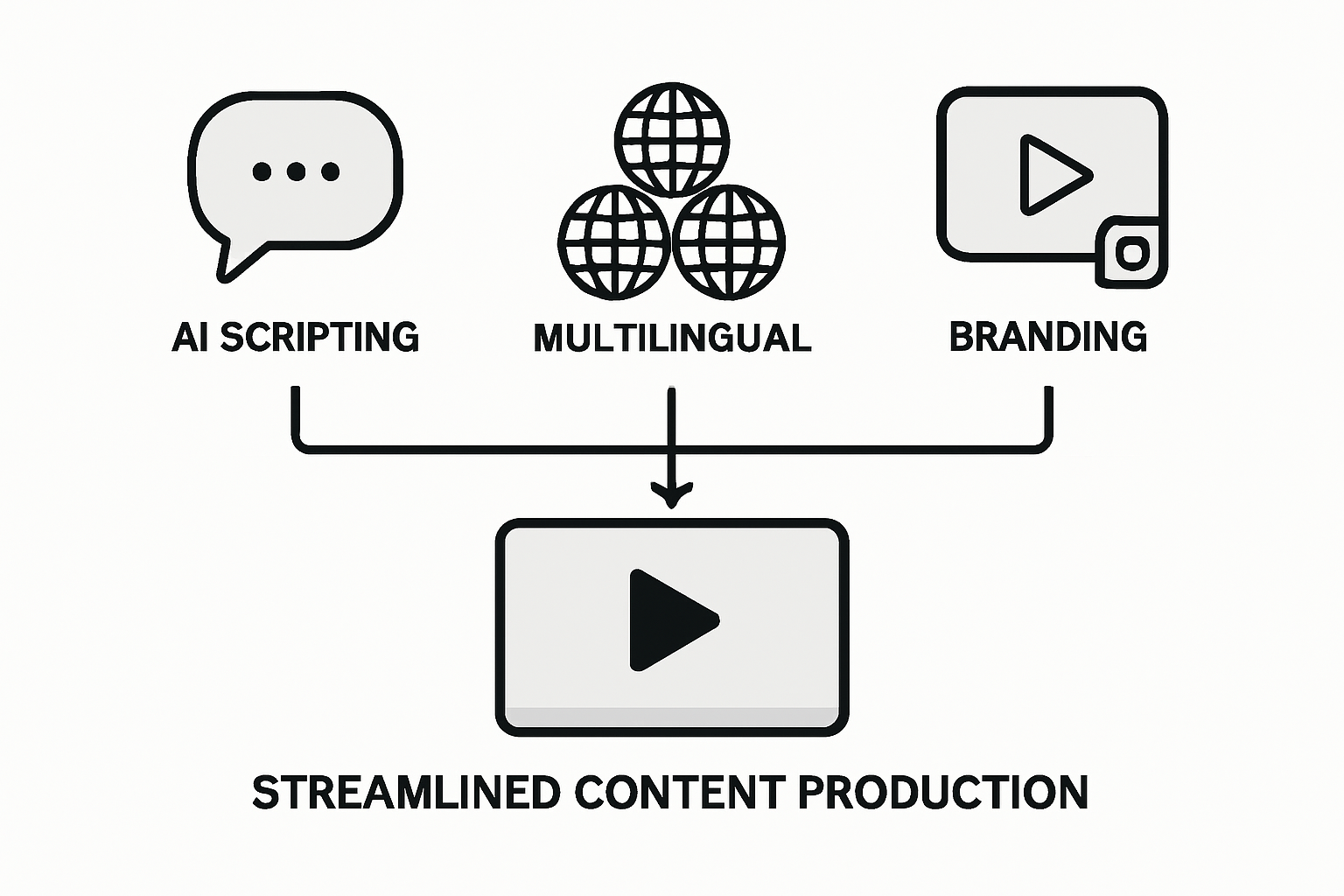
AI-driven scripting technologies represent a breakthrough in content generation, allowing users to transform raw ideas into polished, professional scripts automatically. These intelligent systems analyze context, tone, and communication objectives to craft narratives that resonate with specific audiences. By leveraging machine learning algorithms, creators can now generate compelling scripts for presentations, marketing materials, tutorials, and training videos with minimal manual intervention.
Multilingual and branding capabilities further extend the power of these innovative tools. Customizable branding solutions now enable organizations to maintain visual consistency across different languages and cultural contexts. Key features include:
- Instant script generation tailored to specific communication goals
- AI-powered voiceover production
- Automatic translation and localization
- One-click brand template application
- Consistent visual identity across multiple platforms
- Seamless multilingual content adaptation
By integrating advanced AI technologies, these platforms democratize high-quality video production, empowering creators to communicate effectively without extensive technical expertise or significant time investments.
Real-World Use Cases Across Professions
Voice-to-video technologies have rapidly transformed workflows across diverse professional domains, enabling unprecedented communication efficiency. Async video communication methods are revolutionizing how teams collaborate, share information, and produce content across multiple industries and roles.
AI voice-over technologies now empower professionals to create high-quality multimedia content without traditional recording constraints. Marketing teams can generate compelling product demonstrations, educators can develop engaging instructional materials, and social media creators can produce polished content rapidly. These tools eliminate expensive recording equipment and extensive post-production processes, democratizing professional-grade video creation.
Multilingual content production has also been dramatically simplified through advanced AI platforms. Voice cloning and editing technologies enable creators to adapt content for global audiences with remarkable speed and precision. Professional use cases span multiple sectors:
- Startup founders creating investor pitch videos
- Product managers explaining feature updates
- Freelancers delivering client project walkthroughs
- HR teams producing onboarding and training content
- Marketing professionals generating localized ad campaigns
- Educators developing international learning resources
By breaking down technical barriers and reducing production complexity, voice-to-video tools are fundamentally reshaping how professionals communicate, collaborate, and share information across global platforms.
Pitfalls, Limitations, and Common Misconceptions
While voice-to-video technologies offer remarkable capabilities, they are not without inherent challenges and potential drawbacks. Emerging AI communication tools require careful understanding to leverage their full potential while mitigating potential risks and limitations.
Ethical considerations in AI voice technologies remain a critical concern for professionals. The potential for voice cloning raises important questions about consent, authenticity, and potential misuse. Organizations must establish clear guidelines to ensure responsible implementation, protecting individual privacy and preventing unauthorized representation.
AI-generated voiceover limitations present another significant challenge. While technology continues to advance, current systems often struggle to capture the subtle emotional nuances that human narrators naturally convey. Key misconceptions and limitations include:
- Assumption of perfect emotional intelligence
- Overestimating contextual understanding
- Believing AI can completely replace human creativity
- Ignoring potential algorithmic biases
- Underestimating the complexity of genuine communication
- Neglecting the importance of human review and refinement
Successful implementation requires a balanced approach that recognizes both the transformative potential and current limitations of voice-to-video technologies, treating them as powerful collaborative tools rather than complete substitutes for human communication.
Unlock Seamless Voice-to-Video Workflows with Boom
The article highlights how voice-to-video tools solve the challenge of turning raw speech into clear, engaging videos quickly and effortlessly. If you are tired of complex editing, scheduling headaches, or losing emotional connection in AI voices, Boom is built just for you. It fuses AI-powered auto-scripting, professional voiceover dubbing, and instant branding to save hours without compromising quality. Say goodbye to the frustration of juggling multiple tools or missing global teams because of timezone conflicts.
Boom’s async-first design and voice-to-video recording build on the very concepts discussed such as AI scripting, multilingual dubbing, and branded templates. Whether you are a freelancer needing smooth client updates, a marketing team explaining features in minutes, or a startup founder pitching investors without the usual drag, Boom transforms your spoken ideas into polished videos on your schedule. Experience how Boom turns the promise of voice-to-video innovation into real time earned every day.
Ready to save time and achieve professional-quality video content without the hassle You can start with Boom’s AI-powered async video platform today.
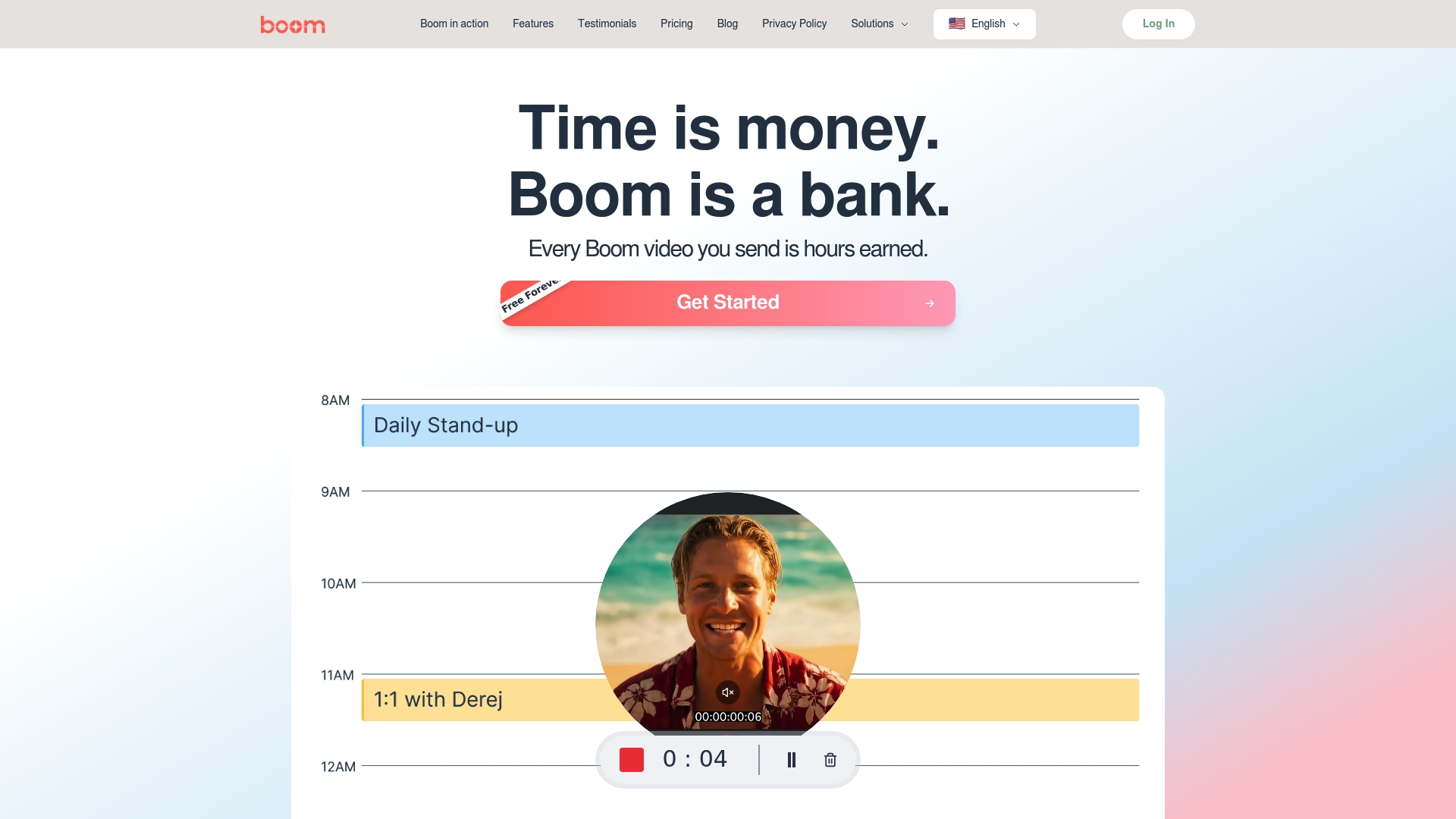
Explore how easy it is to turn voice into branded, global-ready videos with Boom and say goodbye to endless meetings and editing. Visit Boom Landing Page now and reclaim your time with the future of modern workflows.
Frequently Asked Questions
What are voice-to-video tools?
Voice-to-video tools are innovative technologies that convert spoken communication into structured and visually engaging video content using artificial intelligence. These platforms streamline multimedia content creation by integrating features like speech recognition and automated scripting.
How do voice-to-video tools benefit modern workflows?
These tools benefit modern workflows by eliminating complex editing processes and enabling faster content creation. Users can edit videos through text-based interfaces and produce professional-quality videos with minimal technical skills, reducing production time by up to 70%.
Can voice-to-video tools support multilingual content creation?
Yes, voice-to-video tools support multilingual content creation by incorporating advanced transcription, translation, and voice-over capabilities, allowing users to easily generate localized video versions for global audiences.
What are some limitations of voice-to-video technologies?
Some limitations include potential ethical concerns related to voice cloning, the inability to fully capture emotional nuances in voiceovers, and the need for human review to ensure quality and contextual accuracy.
Recommended
About the Author
Daniel M
Contributor.